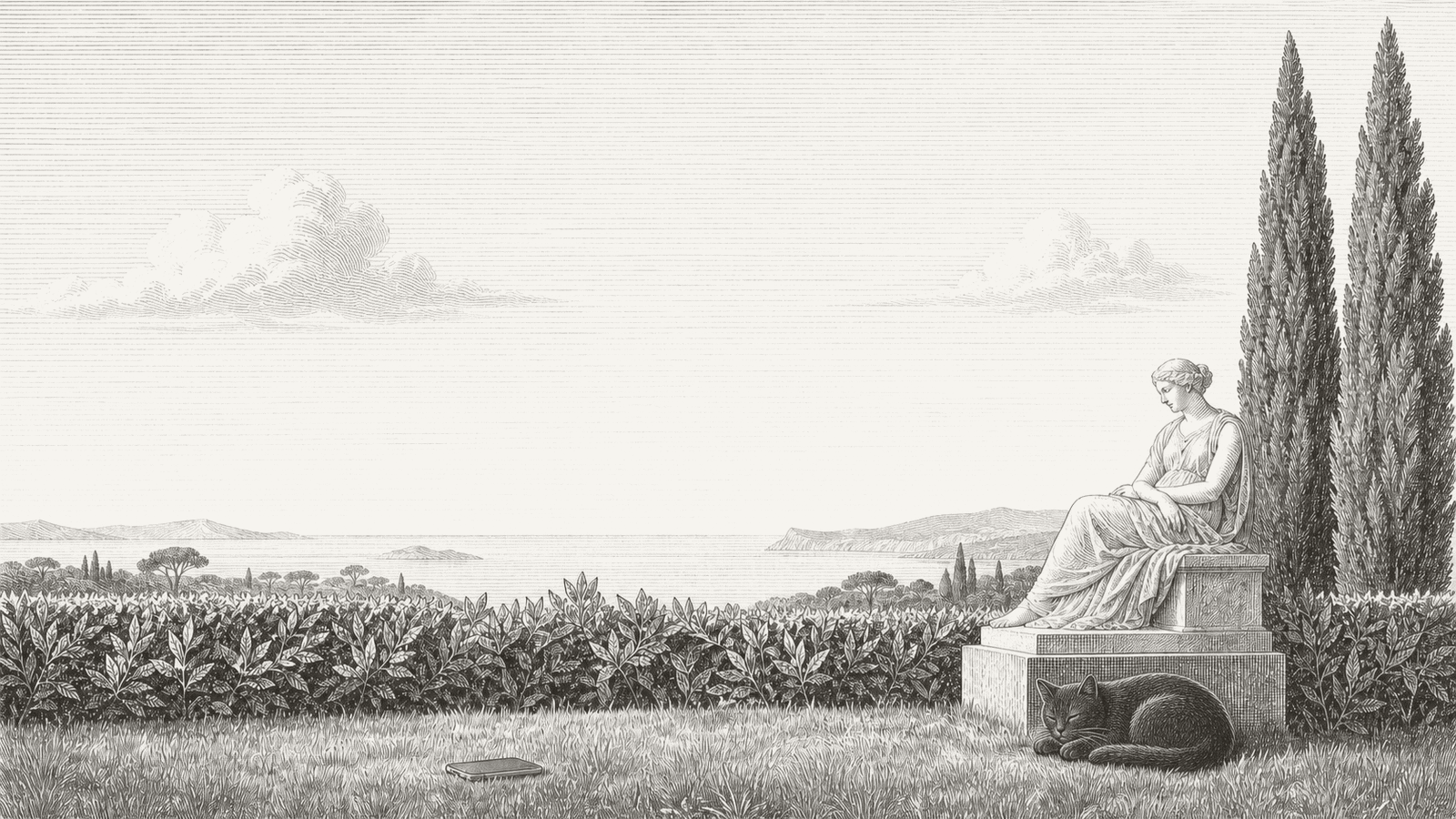
A good day can end at three
Productivity vs. Effectiveness: When the Important Work Is Done
Productivity counts how much work entered the day. Effectiveness asks whether the work that mattered is complete—and lets the day continue afterward.
3 minute read · Published 2026-07-11
Dear friend,
At nine, a career coach named Ben opens a message from a client.
She has an interview on Friday. For six months, she has sent résumés into the world and heard nothing come back. Ben reads the job description, rewrites the first half of her résumé, and spends an hour helping her tell one true story about work she is proud of.
At two forty-seven, she writes: They moved me to the final interview.
The day has done what it came to do.
But three feels too early to stop. Ben opens the website. He changes a heading, moves it back, checks three numbers, and makes a list of posts he may never write.
At five, the résumé is no better. The website is slightly different. Ben is tired enough to believe he had a full day.
The useful work was finished. Busyness remained available.
Productivity asks how much activity fits inside an hour. Emails answered. Calls taken. Boxes checked. Minutes left without supervision.
Effectiveness asks a smaller and more difficult question: did the thing that mattered happen?
A full day can be empty. A short day can contain the whole point.
This does not mean every day should end at three. Some work takes until six. A launch can break. A teacher may need the evening to prepare tomorrow’s lesson.
It means hours should answer to the work. The work should not be invented to fill the hours.
We find this difficult because motion is easy to display. A crowded calendar looks wanted. A fast reply looks committed. A person online at midnight can show everyone the glow of the screen.
The customer does not need proof that you were busy. The customer needs the problem to become smaller.
Choose the day’s proof before the day begins. One lesson understood. One proposal sent. One customer able to continue. One page clear enough to publish.
Something outside the to-do list should be different because you worked.
Then do the work that keeps the business sound. Accounts matter. Preparation matters. A loose roof can become tomorrow’s most important work.
But learn to recognise nervous work: refreshing, rearranging, and adding tasks because stopping feels like a confession.
Enough is a decision, not a feeling delivered by an empty inbox.
The inbox will always offer another task. The internet has several billion. If no work may remain before you rest, you have written a sentence without a full stop.
Make the full stop yourself.
The next afternoon, Ben’s important work is done at three. He writes tomorrow’s first task on paper, closes the laptop, and walks to collect his son from school.
His son is surprised. Usually Ben arrives after the playground is empty.
They buy two peaches and sit on a wall. Juice runs over both their wrists. No dashboard records this correctly.
The workday ended. The day did not.
A good day can end at three. A good life does not have to.
The Quiet Company
Otium · The platform for the quiet